
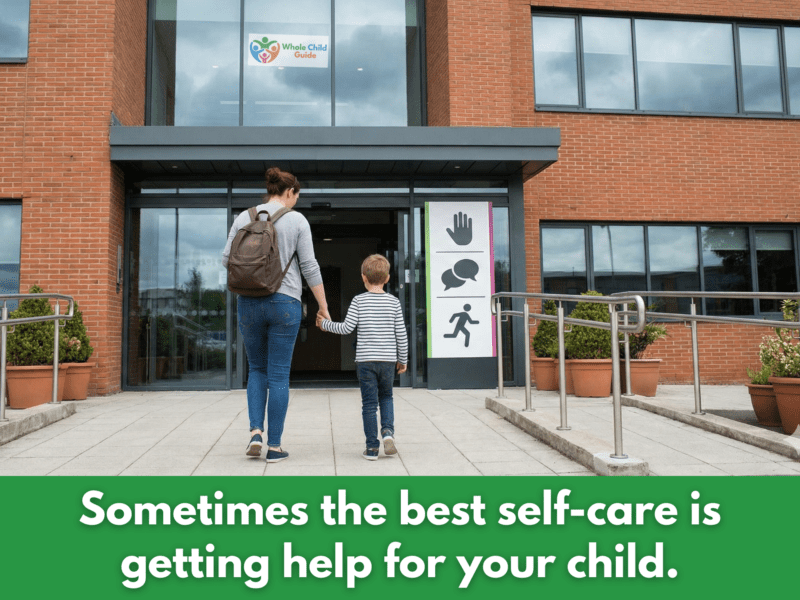
You’ve read all the tip sheets. You’ve researched strategies. You’re trying to work on speech at home, practice motor skills during playtime, implement sensory strategies, manage behaviors, and support learning, all while handling the regular demands of parenting. But here’s what no one tells you: You were never meant to be your child’s therapist, teacher, and specialist all rolled into one. If you’re exhausted, overwhelmed, and running on empty, these parent self-care tips are for you!
The Truth About Parenting Children Who Need Extra Support
Let’s be honest: parenting a child with developmental, sensory, behavioral, or learning challenges is exhausting in ways that others often don’t understand. You’re not just managing typical parenting responsibilities. You’re also:
- Trying to implement strategies from multiple tip sheets and articles
- Worrying whether you’re doing enough
- Feeling guilty when you don’t have energy for “one more activity”
- Second-guessing every interaction: “Am I helping or making it worse?”
- Carrying the weight of your child’s progress on your shoulders
- Losing sleep over their future
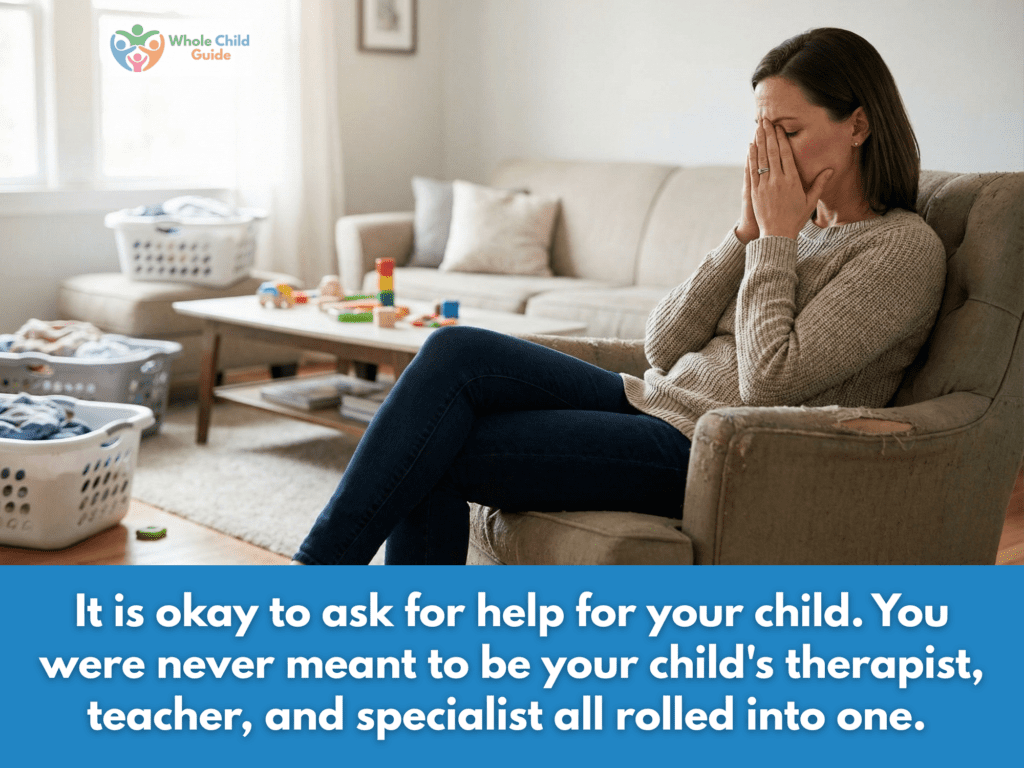
This is hard work. And trying to be everything your child needs, parent, therapist, advocate, teacher, is a recipe for burnout. The emotional, physical, and mental toll is real. And you can’t keep going like this.
Why You Can’t Do This Alone (And Shouldn’t Have To)
Here’s the truth that might set you free: Your child doesn’t need you to be perfect at everything. They need you to be their parent. When you’re trying to manage every aspect of your child’s development yourself, you’re spread impossibly thin. You’re constantly in “therapist mode” instead of just being Mom or Dad. Every interaction becomes a teaching moment. Every struggle feels like your failure.
And your child? They can feel that pressure too. You weren’t trained for this. Occupational therapists go to school for years. Speech pathologists are licensed professionals. Physical therapists have specialized expertise. And you’re trying to do all of their jobs while also being a parent? No wonder you’re exhausted.
Sometimes the Best Self-Care Is Getting Help for Your Child
Here’s what changes everything: Asking for professional help isn’t giving up. It’s the smartest thing you can do for your child AND for yourself. When you bring in the right professionals to support your child’s development, something amazing happens:
You get to breathe.
You’re no longer solely responsible for fixing every challenge. You’re no longer Googling strategies at midnight. You’re no longer carrying the crushing weight of whether your child will be okay. Instead, you have a team. Experts who know what they’re doing. People who can make progress in ways you couldn’t alone—not because you’re failing, but because this is their specialty.
What Getting Help Actually Means
When you connect your child with the right support, you’re not handing off your responsibilities. You’re creating space to be the parent your child needs you to be. With professional support in place:
- Your child gets evidence-based interventions from trained specialists
- You get clear guidance on what to do at home (without shouldering the entire therapeutic burden)
- Your interactions can be about connection, not constant correction
- You can celebrate progress instead of stressing about gaps
- You finally have breathing room to take care of yourself
The best gift you can give your child is a parent who isn’t burned out. And sometimes that means admitting you need professional support.
The Relief That Comes With the Right Team
Imagine what it would feel like if:
- An occupational therapist was addressing your child’s sensory and motor challenges
- A speech therapist was working on language development with proven strategies
- A physical therapist was helping with coordination and strength
- A behavioral specialist was giving you tools for challenging moments
- You could focus on being present with your child instead of constantly “working” on skills
This isn’t lazy. This is wise. Your child needs professionals who can provide targeted, effective interventions. And you need to not carry this entire load alone.
How to Ask for Help Without Guilt
Many parents struggle with this step. You might think:
- “I should be able to handle this myself”
- “Other parents seem to manage fine”
- “Getting help means I’m admitting I can’t do it”
- “We can’t afford services”
- “The waitlists are too long, so why even try?”
Let’s reframe this: Getting help doesn’t mean you’re failing. It means you love your child enough to give them what they need even when that means bringing in experts.
Taking the First Step
If you’ve been trying to manage everything on your own, here’s your permission to stop. Not sure where to start? Use our tool to help find the right professional for your child—it walks you through the process of identifying what type of support your child needs and how to find qualified providers in your area.
Here’s what to consider:
- Connect with an occupational therapist if sensory, motor, or self-care skills are challenging
- Find a speech-language pathologist if language, communication, or feeding are concerns
- Work with a physical therapist if gross motor skills or coordination need support
- Seek out behavioral support if challenging behaviors are overwhelming your family
- Consider parent coaching to help you navigate the system and prioritize what matters most
Yes, there may be waitlists. Yes, it may take time. But every week you wait is another week you’re carrying this burden alone. Start now. Make the calls. Get on the waitlists. Research your options.
Ready to find help today? Search our directory of providers to connect with occupational therapists, speech therapists, physical therapists, and other specialists who can support your child’s development. Learn how to use the directory here.
Parent Self-Care Starts With Letting Go of the Pressure
Once you’ve taken the step to get professional support, here’s what self-care can actually look like:
Give Yourself Permission to Just Be a Parent
- Play with your child without turning it into a therapy session
- Enjoy moments together without analyzing their development
- Celebrate the little joys without worrying about milestones
- Trust that the professionals are handling the therapeutic work
Reclaim Your Energy
- Stop researching strategies at midnight—you have a team for that
- Let go of the guilt when you’re not “working” on skills
- Use the time during therapy sessions to rest, not just run errands
- Recognize that your presence matters more than your performance
Build in Actual Rest
- Sleep without the weight of being solely responsible
- Take a walk without your phone, just to clear your head
- Say yes when someone offers to help
- Schedule time for yourself without justifying it
You Don’t Have to Be the Expert, You Just Have to Be There
Your child doesn’t need you to have all the answers. They don’t need you to be their therapist. They need you to be their safe place. Their cheerleader. Their parent. And you can’t be that if you’re drowning under the weight of trying to fix everything yourself. Getting professional help for your child isn’t outsourcing your love. It’s making room for it to flourish.
You Deserve to Breathe
Self-care isn’t bubble baths and meditation apps (though those are nice). For parents of children who need extra support, self-care is building a team so you don’t have to do this alone. It’s recognizing that asking for help is the bravest, smartest thing you can do.
It’s giving your child access to experts who can help them thrive. It’s creating space for you to actually be present instead of perpetually exhausted. You’ve been carrying this alone for too long.
What if this week, instead of looking for another strategy to implement, you took one step toward getting professional support? Made one phone call? Filled out one intake form? Got on one waitlist?
That’s not giving up. That’s giving yourself, and your child, the gift of support. You deserve help. Your child deserves experts. And you both deserve a life where you’re not just surviving, but thriving.
Ready to build your child’s support team?
→ Find the right professional for your child
→ Search our provider directory
→ Learn how to use our resources
You don’t have to figure this out alone. Take the first step today.