
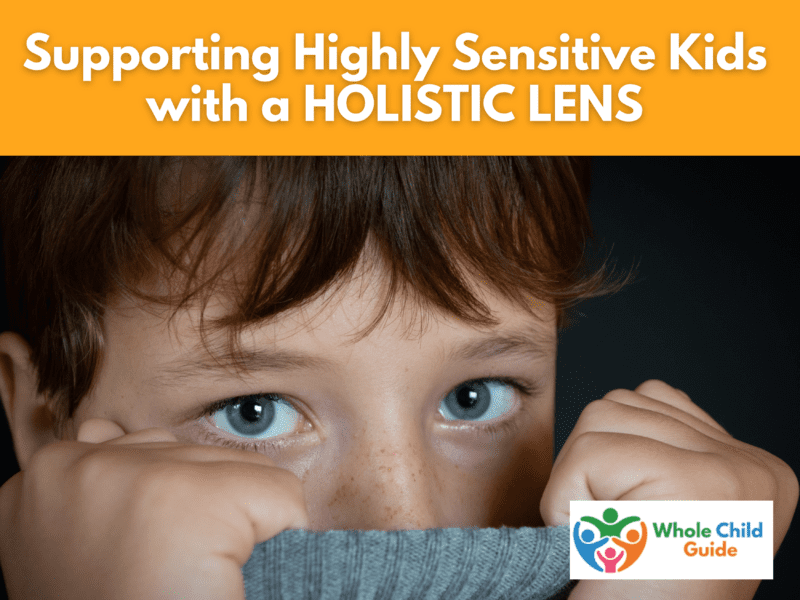
Today’s article is a resource for parents of highly sensitive child using a holistic lens to take a deeper look at what’s happening below the surface. Parenting a highly sensitive child often comes with big questions and even bigger emotions. When a child reacts strongly to social situations, struggles in busy environments, or needs extra time to warm up to peers, caregivers may wonder how sensitivity affects friendships, confidence, and everyday interactions. Understanding these patterns through a whole child perspective helps families move beyond labels and see how temperament, sensory processing, emotional regulation, and connection all work together. Exploring social skills through a holistic lens gives parents and professionals insight into how sensitivity influences relationships, and how the right supports can help children build social confidence while honoring who they are.
If you’re parenting a child who feels everything deeply, you’re not alone. In parent groups, questions about highly sensitive children come up again and again:
- “How do I support my highly sensitive child in loud or unpredictable settings?”
- “Why do small frustrations feel so big for them?”
- “How can I help them build resilience without pushing too hard?”
Highly sensitive children are not broken, dramatic, or weak. They are often deeply perceptive, empathetic, and thoughtful. Understanding sensitivity through a whole child lens helps caregivers move from managing behavior to supporting regulation, confidence, and long-term well-being.
What Does “Highly Sensitive” Really Mean?
Highly sensitive children tend to process sensory and emotional information more deeply than their peers. This trait is often linked to temperament, the natural way a child experiences and responds to the world.
Highly sensitive children may:
- Notice subtle sounds, textures, or changes in routine
- React strongly to emotional situations
- Feel overwhelmed in busy or unpredictable environments
- Take longer to warm up to new people or experiences
- Experience joy, empathy, and creativity very intensely
Sensitivity is not a diagnosis. It’s a trait, and one that can be supported, guided, and nurtured.
Highly sensitive children often experience the world with a heightened level of awareness. This means their brains and bodies are taking in more information at once, sensory, emotional, and relational, and processing it deeply.
When a child notices subtle sounds, textures, or changes in routine, it reflects a nervous system that is highly attuned to the environment. Small background noises, the feel of clothing seams, or a minor shift in daily plans may register as significant. From a holistic lens, this isn’t being “picky” or inflexible, it’s a child whose sensory system is working overtime, constantly scanning for information and safety.
Children who react strongly to emotional situations often feel emotions in their full intensity before they have the tools to manage them. Their emotional responses can be fast and powerful because their internal experience is rich and vivid. These children are not choosing to overreact; their nervous system is responding authentically to what feels big and meaningful to them. Supporting emotional regulation, rather than suppressing emotion, is key.
When a child feels overwhelmed in busy or unpredictable environments, it’s often because multiple demands are happening at once — noise, movement, social expectations, transitions, and sensory input. A highly sensitive nervous system may struggle to filter and prioritize this information, leading to shutdown, withdrawal, or emotional outbursts. Holistic support focuses on reducing overload, building predictability, and gradually strengthening coping skills.
Highly sensitive children may also take longer to warm up to new people or experiences. This pause is a form of thoughtful processing, not avoidance. These children often observe carefully, gather information, and seek emotional safety before engaging. Given time and support, they often participate fully — but they need space to acclimate at their own pace.
At the same time, highly sensitive children often experience joy, empathy, and creativity very intensely. Their deep emotional awareness allows them to connect strongly with others, notice beauty and nuance, and express themselves through art, storytelling, or imaginative play. These strengths are an essential part of who they are and should be nurtured alongside regulation skills.
Through a whole child lens, sensitivity is understood as an interaction between temperament, sensory processing, emotional development, and environmental demands. When adults respond with understanding, structure, and support, highly sensitive children can thrive, not by becoming less sensitive, but by learning how to navigate the world with confidence and resilience.

Supporting the highly sensitive child requires us to look below the surface of behaviors and actions to see what’s really going on.
Why Do Small Frustrations Feel So Big?
For highly sensitive children, the nervous system works overtime. What looks like a “small” issue to an adult can feel enormous to a child whose brain and body are taking in more information at once.
From a whole child perspective, big reactions are often the result of:
- Sensory overload (noise, movement, visual clutter)
- Emotional intensity (strong feelings with limited coping tools)
- Cognitive load (processing multiple demands at once)
- Fatigue or poor sleep, which lowers regulation capacity. We might see big anger emotions surfacing.
This is why sensitivity often overlaps with sleep challenges and emotional regulation difficulties. You may find it helpful to explore how regulation and rest intersect in
👉 My Child Has Sensory Issues — What Can We Do to Help Them Fall Asleep and Stay Asleep?
Supporting Highly Sensitive Children in Loud or Unpredictable Settings
Busy classrooms, birthday parties, family gatherings, and sports events can be especially taxing for sensitive children.
Helpful strategies include:
- Preparing them ahead of time with clear expectations
- Offering choices (“Do you want to stay for 10 minutes or 20?”)
- Creating exit plans or quiet breaks
- Allowing sensory supports (headphones, fidgets, movement breaks)
Occupational therapists often help families understand a child’s sensory profile and design strategies that support participation without overwhelm.
You can learn more about how sensory processing affects daily life in
👉 Social-Emotional Skills Through a Holistic View
Emotional Intensity and Self-Regulation
Highly sensitive children often feel emotions deeply but may not yet have the skills to manage them. This can look like frequent tears, shutdowns, or explosive reactions.
Rather than asking children to “calm down,” a whole child approach focuses on:
- Co-regulation before self-regulation
- Naming emotions and validating experiences
- Teaching coping strategies during calm moments
- Modeling emotional flexibility and repair
Speech therapists, counselors, and parent coaches often support emotional language, perspective-taking, and coping skills that help sensitive children navigate big feelings more effectively.
Building Resilience Without Pushing Too Hard
One of the biggest fears parents express is this: “If I accommodate my child’s sensitivity, am I holding them back?”
Resilience doesn’t come from forcing children into overwhelming situations. It comes from feeling safe enough to stretch.
Helpful principles include:
- Gradual exposure, not sudden immersion
- Support before independence
- Skill-building alongside challenge
- Celebrating effort, not just outcomes
Resilience grows when children trust that adults understand their limits and believe in their capacity to grow.
The Role of Play and Peer Relationships
Highly sensitive children may want friendships deeply but feel overwhelmed by group dynamics. Play-based social learning helps children practice:
- Entering and exiting play
- Negotiating conflict
- Managing disappointment
- Taking others’ perspectives
You may find it helpful to explore how sensitivity and friendships intersect in
👉 Social Skills and Play
When Professional Support Can Help
Some highly sensitive children benefit from additional support, especially when sensitivity interferes with daily life.
A whole child team may include:
- Occupational therapists for sensory regulation (read about occupational therapy here)
- Speech therapists for emotional expression and social communication (learn more about Speech Therapy here)
- Physical therapists when movement, posture, or endurance affect regulation (read about Physical Therapy here)
- Parent coaches or counselors to support family routines and emotional resilience (read about how parent coaching can help)
The goal is not to change who your child is, it’s to give them tools to thrive.
Honoring Sensitivity as a Strength
Highly sensitive children often grow into empathetic leaders, creative thinkers, and deeply connected adults. With the right support, sensitivity becomes a strength rather than a burden.
When we look at sensitivity through a whole child lens, we stop asking how to toughen kids up, and start asking how to help them feel safe, capable, and confident in the world around them.
To find professionals who understand and support highly sensitive children, visit the
👉 Whole Child Guide Directory