
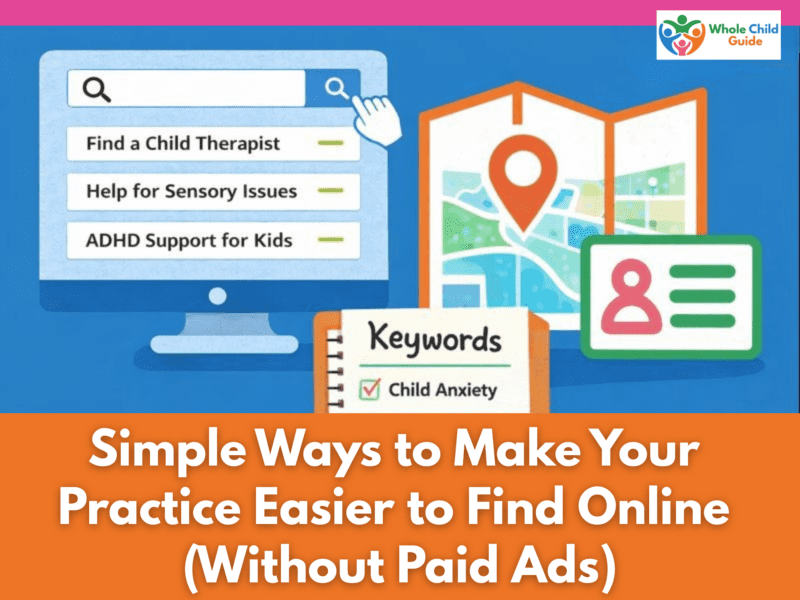
Many child development professionals want to reach more families but do not want to spend time or money on ads, constant posting, or complicated marketing systems. The good news is that visibility does not require becoming a marketer. Small, intentional changes to how you describe your work and where you show up online can make a meaningful difference over time. Read more about simple, sustainable ways to help make your practice easier to find online for families when they are actively looking for support.
What Parents Actually Search for When Looking for Help
Most parents do not search using professional terminology. They rarely type certifications, therapy models, or clinical language into Google. Instead, they search using everyday concerns and questions. Examples of common parent searches include:
- “Help for my child with attention”
- “Occupational therapist near me”
- “Child struggles with transitions”
- “Support for sensory challenges”
- “Help with emotional regulation”
- “Therapy for kids near me”
Parents usually search based on:
- A problem they are noticing
- A behavior they are worried about
- A location
- A type of support they have heard about
This is why visibility starts with understanding how families describe their needs, not how professionals describe their credentials. If you want a deeper breakdown of how families move from concern to contact, this resource about finding new clients may help.
Using Clear Keywords on Your Website and Profiles
Once you understand what families are searching for, the next step is using those words consistently across your online presence. You do not need advanced SEO tools. Focus on clarity and repetition. Helpful places to use clear keywords include:
- Your homepage headline
- Your “About” section
- Service descriptions
- Page titles
- Directory listings
- Short summaries or bios
For example, instead of only writing: “Providing evidence-based pediatric intervention services”
You might also include: “Supporting children with attention, regulation, motor skills, and daily routines” This makes your site easier for both people and search engines to understand.
If you want a structured way to clarify your message and make your services easier to explain, this resource can help you shape consistent language across platforms.
Writing Bios That Match Real Parent Language
Your bio is often the first place a parent decides whether to keep reading or move on. A strong bio does not need to list every credential or training. Instead, it should help families feel understood and reassured. Helpful elements to include:
- Who you help
- What challenges you commonly support
- How you approach your work
- What families can expect when working with you
Try to write as if you are answering this question: “I’m a parent reading this at night, worried about my child. Does this person understand what I’m dealing with?” Plain, human language tends to perform better than formal or academic wording. You can still be professional without sounding clinical.
The Role of Directories and Listings
Directories help families find professionals in one central place, especially when they do not know where to start. They also help with online visibility by creating additional trusted pages that reference your work. Being listed in relevant directories can:
- Improve search visibility
- Create another pathway for families to find you
- Provide social proof and credibility
- Reduce reliance on social media
It is most helpful to choose directories that focus on child development or family services rather than broad, unrelated listings. If you want to understand how local visibility works and how listings support it, this guide walks through the basics in a practical way.
Small Consistency Habits That Improve Discoverability
You do not need to do everything at once. Small, repeatable habits tend to be more sustainable and effective over time. Here are a few low-effort practices that add up:
- Use the same wording for your services across platforms
- Keep your contact information consistent everywhere
- Update your bio once or twice a year
- Add short educational descriptions instead of only titles
- Link your website when possible
- Reuse the same language in multiple places rather than reinventing it
Consistency helps search engines understand what you offer and helps families feel confident that they have found the right type of support. Making your practice easier to find does not require ads, algorithms, or constant content creation. It starts with clarity, consistency, and language that reflects how families actually think and search. Small adjustments can quietly improve visibility over time and help the right families find their way to you.