
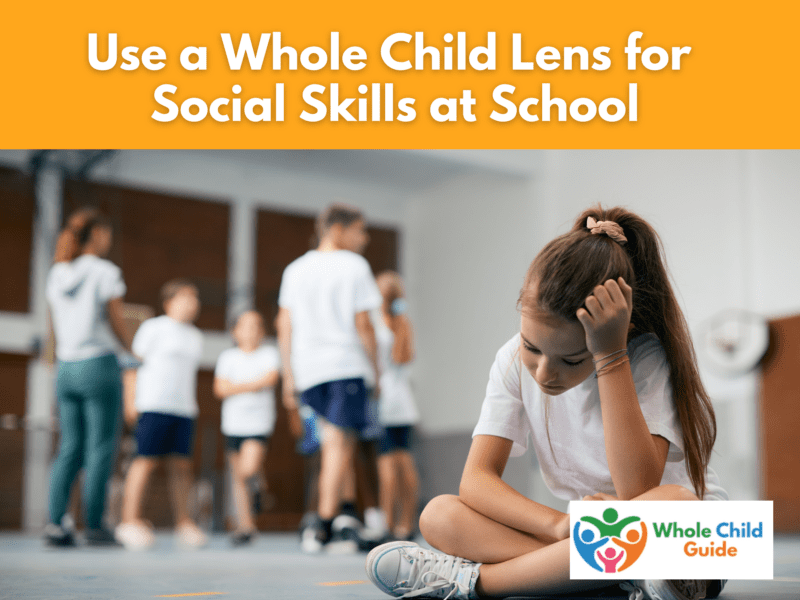
School is one of the most socially demanding environments children experience. From morning drop-off to recess, group projects, classroom discussions, and navigating friendships, students are constantly practicing their social skills. There is a lot that plays into these skills and requires a whole child perspective. This is all part of taking a holistic view of social skills.
Parents often ask:
- “Why does my child struggle socially at school but seem fine at home?”
- “How can I help my child make friends at school?”
- “Are these social challenges developmental, anxiety-related, or something else?”
- “Should I seek support?”
Understanding social skills at school through a holistic lens helps families and professionals see the bigger picture. Social development isn’t just about manners or being outgoing in social situations. It’s everything in the school environment and is built on regulation, communication, executive functioning, sensory processing, and emotional awareness.
For the professionals and therapists reading this, there is a real need for emotional regulation and social skill development. Consider creating an educational workshop in social skill development.
What Are Social Skills at School?
Social skills at school include the ability to:
- Join group activities
- Take turns and share materials
- Follow classroom expectations
- Read social cues
- Manage frustration or anger
- Advocate for help
- Navigate peer conflict
- Work collaboratively
These skills rely on many underlying developmental systems working together.
When one system is overwhelmed or underdeveloped, school-based social interactions can become difficult.
Why School Social Skills Can Be Harder Than Home
Many parents notice their child functions well in familiar home environments but struggles socially at school.
School requires:
- Sustained attention
- Frequent transitions
- Noise tolerance
- Peer negotiation
- Emotional flexibility
- Independence from caregivers
A child who is sensitive to sound, anxious about mistakes, or struggling with executive functioning may appear socially withdrawn, reactive, or distracted.
If your child also experiences anxiety, you may find this helpful: Anxiety in Kids Through a Holistic Lens.
The Role of Emotional Regulation
Social success begins with regulation.
When children feel calm and safe, they are more able to:
- Interpret social cues accurately
- Respond flexibly to peers
- Handle disappointment
- Recover from conflict
When the nervous system is dysregulated, social misunderstandings increase.
Children may:
- Overreact to minor peer issues
- Withdraw from group work
- Shut down when corrected
- Seek excessive reassurance
Emotional literacy plays a major role here. Learn more in:
Social-Emotional Skills Through a Holistic View
Sensory Processing and the School Environment
Classrooms are busy environments.
Bright lights, hallway noise, cafeteria chaos, and unpredictable peer behavior can overwhelm children with sensory sensitivities.
When sensory overload occurs, social skills often decline.
You might see:
- Irritability during group work
- Avoidance of recess
- Meltdowns after school
- Difficulty sitting near peers
Occupational therapists frequently support sensory regulation strategies that improve classroom participation.
Executive Functioning and Social Interaction
Executive functioning skills directly influence peer relationships at school.
These include:
- Flexible thinking
- Inhibition
- Planning
- Emotional control
- Working memory
A child who struggles with flexibility may argue about rules during games. A child with inhibition challenges may interrupt or blurt out comments. A child with planning difficulties may struggle with group projects.
These are not “bad behaviors”. They are skill-based challenges.
Play and Peer Relationships
Recess and unstructured play are often the most challenging parts of the day for some children.
Joining play requires:
- Observing group dynamics
- Entering appropriately
- Accepting feedback
- Managing conflict
If your child struggles with this, explore: Social Skills and Play
Structured social skills groups, speech therapy, or guided peer experiences can provide supported practice.
How Sleep and Anxiety Affect School Social Skills
Social functioning declines quickly when children are tired or anxious.
Poor sleep reduces emotional regulation and flexibility.
Anxiety increases avoidance and fear of embarrassment.
If sleep may be playing a role, consider: How Much Sleep Do School-Age Children and Teenagers Really Need?
Signs a Child May Need Support
Consider seeking support if your child:
- Consistently avoids peers
- Has frequent social conflicts
- Expresses loneliness or isolation
- Melts down after school daily
- Struggles with group work or collaboration
- Shows anxiety around school attendance
Early support can prevent social patterns from becoming entrenched.
How Professionals Support Social Skills at School
A whole child team approach may include:
Occupational Therapy
- Sensory regulation
- Emotional regulation strategies
- Social problem-solving
How can occupational therapy near me help?
Speech Therapy
- Pragmatic language skills
- Perspective-taking
- Conversation skills
How Can Speech Therapy Near Me Help?
Physical Therapy
- Body awareness
- Postural control that affects attention and engagement
How Can Physical Therapy Near Me Help?
Supporting Social Skills at Home
Parents can help by:
- Talking through social scenarios calmly
- Role-playing common school interactions
- Practicing flexible thinking
- Validating feelings without escalating fear
- Encouraging gradual exposure to challenging settings
Most importantly, focus on skill-building rather than labeling your child as shy, dramatic, or difficult.
One area that can be practiced at home is with the help of Counseling or Parent Coaching. These professionals can help with:
- Anxiety management
- Coping strategies
- Social confidence building
How can parent coaches help with social skills?
Social Skills Are Developmental, Not Fixed
Social competence grows over time. Children develop at different rates.
When we look at social skills at school through a holistic lens, we stop asking, “Why can’t my child just behave?” and start asking, “What underlying skill needs support?”
With patience, structure, and the right professional guidance, children can build the confidence and flexibility they need to navigate school relationships successfully.
To find professionals who support social development, try our connection tool.
Our Connection Tool helps parents and guardians connect with the right professionals their child needs. Try it today.