
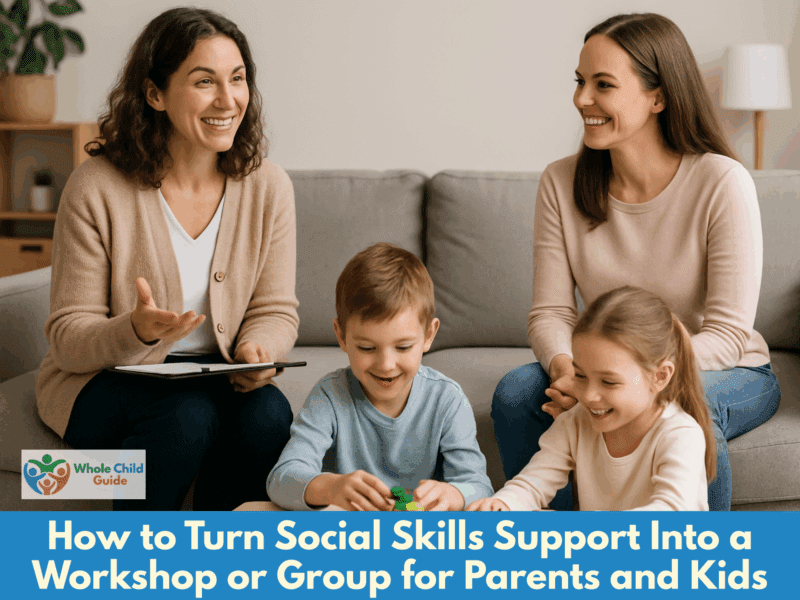
Social skills are the foundation for friendship, collaboration, and lifelong emotional health. They include skills like reading facial expressions, taking turns, starting conversations, joining play, sharing, compromising, and understanding others’ perspectives. These abilities directly impact a child’s confidence, school success, and mental wellness. Child development professionals can provide children with social skills support through workshops, groups or individual sessions.
Challenges in this area might look like:
- A child who plays alone at recess, not because they prefer it, but because they don’t know how to join in
- Frequent conflicts with siblings or peers over sharing or taking turns
- Difficulty reading social cues—standing too close, interrupting, or missing when someone is upset
- Struggling to make or keep friends, leading to sadness or withdrawal
- Meltdowns during group activities or cooperative games
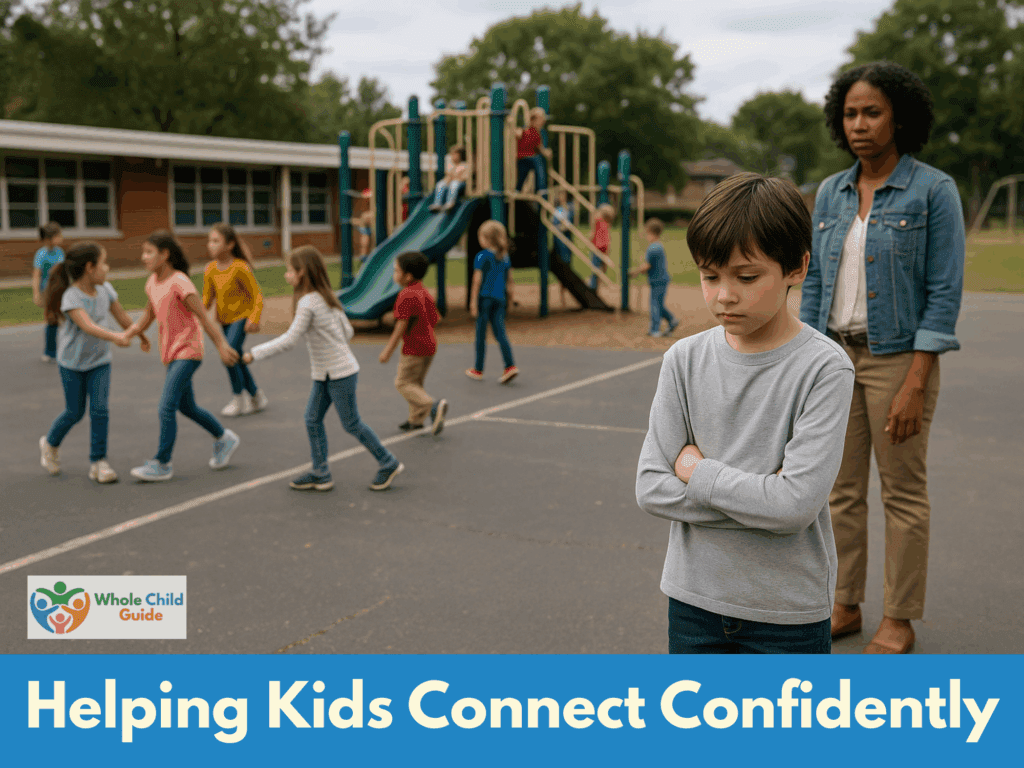
When social skills improve, you’ll see:
- Children initiating play and joining groups with confidence
- Better conflict resolution and fewer emotional outbursts
- Increased empathy and awareness of others’ feelings
- Stronger friendships and positive peer interactions
- Greater participation in classroom and community activities
Possible Services to Support Social Skills
Professionals can build various offerings around social skills, depending on their setting, training, and audience. Choose one or more of the following models:
- Parent Education Workshop (Virtual or In-Person)
- Parent-Child Group or Play Session
- Individual Session (Private Coaching, Consultation, or Insurance-Based)
- Professional Development Training for Staff or Teams
Each version below includes structure, pricing, and implementation guidance.
Social Skills Session Format and Structure
1. Parent Education Workshop – “Building Your Child’s Social Confidence: Understanding and Supporting Social Skills”
Length: 60–75 minutes
Audience: Parents and caregivers
Setting: Community center, clinic, preschool, or virtual
Structure Example:
Welcome & Icebreaker (5–10 min)
Greet parents and introduce the topic. Ask: “What’s one social situation where your child struggles or feels anxious?”
Common answers: playdates, birthday parties, group projects, making friends at school.
Foundations & Science (10–15 min)
Explain how social skills connect to:
- Executive function (impulse control, flexible thinking, working memory for social rules)
- Sensory processing (some kids avoid social situations due to sensory overload)
- Emotional regulation (managing feelings during conflict or rejection)
- Theory of mind (understanding that others have different thoughts and feelings)
Share that social skills are learned, not automatic—just like reading or riding a bike.
Practical Strategies (15–20 min)
Demonstrate 3 home-ready strategies:
- “Script It, Practice It” – Role-play common scenarios (asking to join a game, introducing yourself, saying “no thank you” kindly). Use puppets or stuffed animals for younger kids.
- “Emotion Detective” – Watch short video clips or read books and pause to ask: “How does that character feel? How do you know?” Point out facial expressions, body language, and tone.
- “Turn-Taking Timers” – Use visual timers during sibling play or board games to make waiting concrete and fair.
Parent Reflection & Q&A (15–20 min)
Facilitate discussion:
- “What’s worked for your family?”
- “What’s your biggest barrier—time, sibling dynamics, your child shutting down?”
- Share success stories and normalize the ups and downs.
Wrap-Up & Takeaway (10 min)
Provide a “Social Skills Starter Kit” handout with:
- 10 conversation starters for kids
- A feelings chart
- 3 games that build social skills (e.g., “Guess Who?”, cooperative board games, charades)
Suggested Price:
- $25–35 per parent (virtual or community event)
- $200–300 flat rate for school or PTA-hosted events
Value Add: Include downloadable slides, a recorded Q&A recap, and a “Social Scripts” cheat sheet.
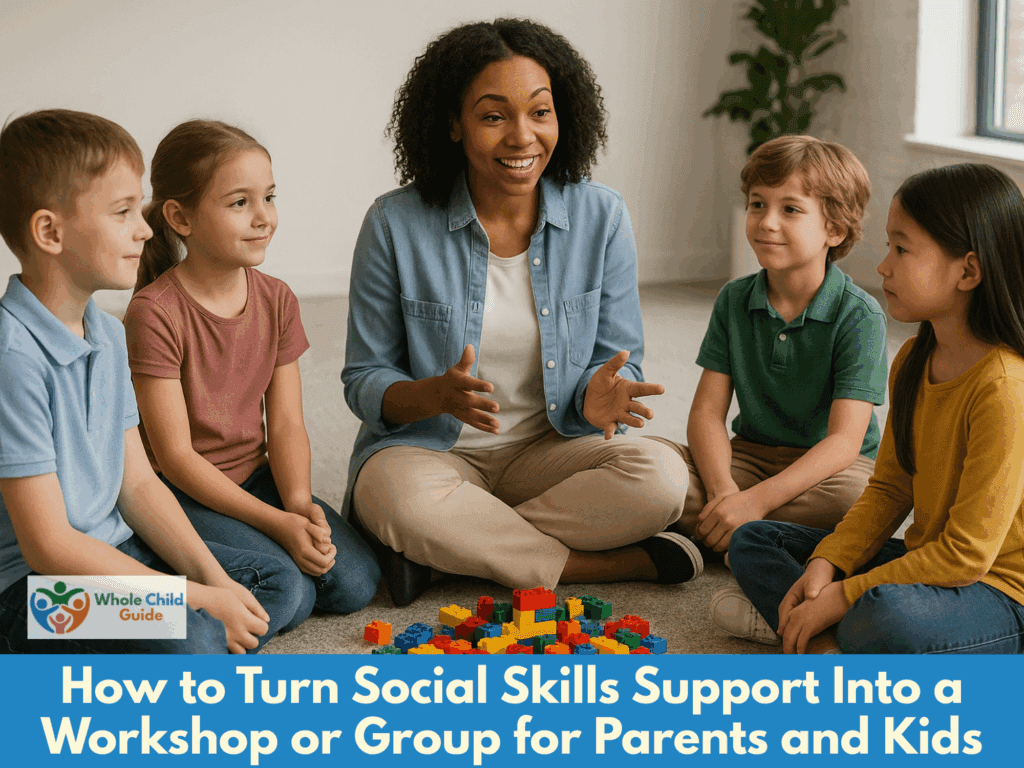
2. Parent-Child Playgroup or Group Session – “Friendship Skills Through Play”
Length: 45–60 minutes
Audience: Small group of 4–6 children (ages 4–10) with parent participation
Setting: Clinic, school gym, community center, or library
Structure Example:
Welcome Circle (5 min)
Use a greeting song or visual chart: “Let’s go around and say our name and one thing we like to do for fun!”
This models turn-taking and active listening from the start.
Model the Skill (5–10 min)
Introduce today’s focus (e.g., “How to Join a Game”) through:
- A short social story or video
- Puppet role-play showing what to do vs. what not to do
- Ask kids: “What did the puppet do that worked? What could they try differently?”
Interactive Play Stations (20–25 min)
Rotate through 2–3 stations that target social skills:
Station 1: Cooperative Building Challenge
Kids work together to build a tower with blocks or build a “town” with LEGOs. Parents coach: “Can you ask your friend what piece they need?” or “What if you take turns adding pieces?”
Station 2: Feelings Charades
Kids draw an emotion card and act it out while others guess. This builds emotional vocabulary and perspective-taking.
Station 3: Turn-Taking Board Game
Simple games like Sneaky Snacky Squirrel, Zingo, or Hoot Owl Hoot. Parents narrate: “I notice you waited so nicely—that made your friend feel happy!”
Parent Coaching Moment (During Play)
Circulate and quietly coach parents:
- “Notice how you helped them problem-solve instead of solving it for them—perfect!”
- Point out successful peer interactions in real time.
Reflection & Goodbye Routine (5–10 min)
Circle back together. Ask each child: “What was one kind thing you or a friend did today?”
Celebrate specific examples: sharing, helping, using words instead of grabbing, etc.
Give each child a “Friendship Challenge Card” to try at home (e.g., “Ask someone at school to play with you” or “Teach someone a game you know”).
Suggested Price:
- $20–25 per child per session
- $75–100 for a 4-week series (“Making Friends,” “Sharing & Turn-Taking,” “Handling Conflict,” “Being a Good Sport”)
Value Add: Include take-home activity packs with social stories, conversation starter cards, or sticker charts.
3. Individual Session – “Personalized Social Skills Support”
(Private Coaching, Consultation, or Insurance-Based Therapy)
Length: 30–45 minutes
Audience: Individual child (with or without parent present)
Setting: Clinic, home visit, or telehealth
Structure Example:
Connection & Check-In (5 min)
Use a warm-up game like “High-Low” (“Tell me one high and one low from your week”) or a quick round of Connect 4 to build rapport.
Targeted Skill Practice (15–25 min)
Engage the child in 2–3 activities tailored to their specific goals:
- For a child who struggles to join play: Role-play approaching a group at recess. Practice opening lines: “Can I play?” “What are you playing?” “That looks fun—can I try?”
- For a child who interrupts: Play a conversation game with a “talking stick” or “wait card.” Practice waiting for pauses and asking, “Can I say something?”
- For a child who has trouble reading emotions: Use emotion flashcards, facial expression apps, or watch short video clips and discuss: “How is that person feeling? What clues tell you that?”
Coaching & Reflection (10 min)
Provide parent feedback:
- “Today we worked on asking questions to keep a conversation going. Here’s a script you can practice at dinner.”
- Update progress notes or data sheets.
- Problem-solve barriers: “What happened when you tried this at home last week?”
Wrap-Up (5 min)
Celebrate small wins: “You made eye contact 5 times today—that’s progress!”
Set one realistic goal for the week: “Try asking one friend one question at lunch this week.”
Suggested Price:
- Private pay or consultation: $75–125 per session
- Insurance-based session: Bill according to CPT codes
Value Add: Offer optional written summaries or email follow-ups with home carryover ideas and printable social scripts.
4. Professional Development Training – “Integrating Social Skills Into Everyday Classroom Practice”
Length: 60–90 minutes
Audience: Teachers, paraprofessionals, or multidisciplinary therapy teams
Setting: School, early intervention center, or virtual in-service
Structure Example:
Introduction (5–10 min)
Share why social skills matter across all settings:
- Academic success depends on collaboration, asking for help, and group work
- Behavioral challenges often stem from social skill deficits, not defiance
- Early intervention prevents peer rejection and mental health struggles later
The Research & Whole Child Lens (10–15 min)
Present brief evidence:
- Connection between social skills and school readiness
- Impact of peer relationships on self-esteem and academic engagement
- How trauma, sensory differences, and neurodivergence affect social development
Hands-On Demonstration (20–25 min)
Lead 4 practical strategies educators can embed into routines:
- Morning Meeting Social Skill Focus – Pick one skill per week (e.g., “complimenting others”) and model/practice daily.
- Social Scripts & Visual Cues – Show laminated cards with phrases like “Can I play?” or “I need help, please.” Keep them accessible in the classroom.
- Structured Recess Games – Teach cooperative games (parachute play, group tag, relay races) to kids who struggle with unstructured play.
- Emotion Check-In Routines – Use a feelings chart or zones of regulation at transitions to build emotional vocabulary.
Collaborative Discussion (15–20 min)
Brainstorm classroom applications:
- “How could you adapt this for your 2nd graders vs. your kindergarteners?”
- “What social skill does your class need most right now?”
Action Plan & Reflection (10–15 min)
Provide templates:
- Weekly social skills lesson plan outline
- Observation checklist for tracking student progress
- Parent communication template for sharing strategies
Suggested Price:
- $300–600 per 60–90 minute training
- $800–1,000 for half-day workshop (include handouts and slide deck)
Value Add: Provide PD certificates, slide handouts, and a digital resource bundle (social stories, visual supports, game ideas).

What to Include in Any of the Social Skills Session
Multi-sensory, play-based activities that support social skill practice (games, role-play, movement, art)
Visuals, checklists, or scripts for consistency and carryover (feelings charts, conversation starters, social stories)
Short parent/educator reflection prompts to encourage noticing and celebrating progress
Simple take-home materials (social skills handouts, visuals, or mini-games)
Follow-up opportunities (email summary, progress tracker, or recheck session)
Marketing and Promotion Tips to Support Social Skills in Children
Focus messaging on outcomes:
- “Help your child make friends and feel confident in social situations”
- “Reduce playground conflicts and build empathy”
- “Give your child the tools to navigate friendships with ease”
Advertise through:
- Local schools, pediatricians, and child psychologists
- Community boards, libraries, and rec centers
- Social media parent groups (Facebook groups, local mom groups, neighborhood apps)
- Partnerships with speech therapists, counselors, or special education coordinators
Create short videos or reels demonstrating:
- A quick “how to join play” role-play
- A parent coaching moment during a game
- A feelings check-in routine
Promote a clear call to action:
- “Register Now – Only 8 Spots Available!”
- “Join Our 4-Week Friendship Skills Series”
- “Limited Early Bird Pricing Ends Friday”
Offer early registration or sibling discounts.
Sample Caption:
“Does your child struggle to make friends or feel left out at recess? Join our ‘Building Social Confidence’ workshop and learn fun, evidence-based strategies to help your child connect, cooperate, and thrive. Limited spots, register today!”
Pricing Summary
| Service Type | Typical Range | Format |
|---|
| Parent Workshop | $25–35/person or $200–300 flat | 60–75 min |
| Parent-Child Group | $20–25/child or $75–100 for series | 45–60 min |
| Individual/Private Coaching | $75–125/session | 30–45 min |
| Professional Development | $300–600 | 60–90 min |
Add-on opportunities:
- Printable social skills handout bundles ($10–15)
- Mini-course recordings ($40–75)
- Small follow-up consults or check-ins ($35–50 for 20 min)
More Opportunities to Support Social Skills
Turn one session into a 4-week progressive series: “Making Friends” → “Sharing & Turn-Taking” → “Handling Conflict” → “Being a Good Sport”
Bundle related skills: “Social Skills + Emotional Regulation” or “Social Skills + Sensory Strategies” for recurring programs
Offer resource packets for teachers or families (visual supports, games, books, apps)
Partner with other professionals for co-led workshops (SLP + OT, counselor + parent coach)
Create digital versions (recorded workshops, downloadable courses) for ongoing passive income
Final Tips for Success to Support Social Skills in Children
- Use visual structure and routine to help both kids and parents feel confident (hello songs, goodbye routines, predictable schedules)
- Keep content practical and focused on everyday carryover – parents need strategies they can use at dinner, not just in “therapy mode”
- Collect testimonials and photos (with consent) for marketing – real stories sell better than features
- Celebrate participation, not perfection – highlight growth and connection, not “getting it right”
- End each session with a “Next Step” or small goal to maintain momentum between sessions
Ready to launch your social skills program? Start with one format, test it, refine it, and grow from there. You’ve got this!