
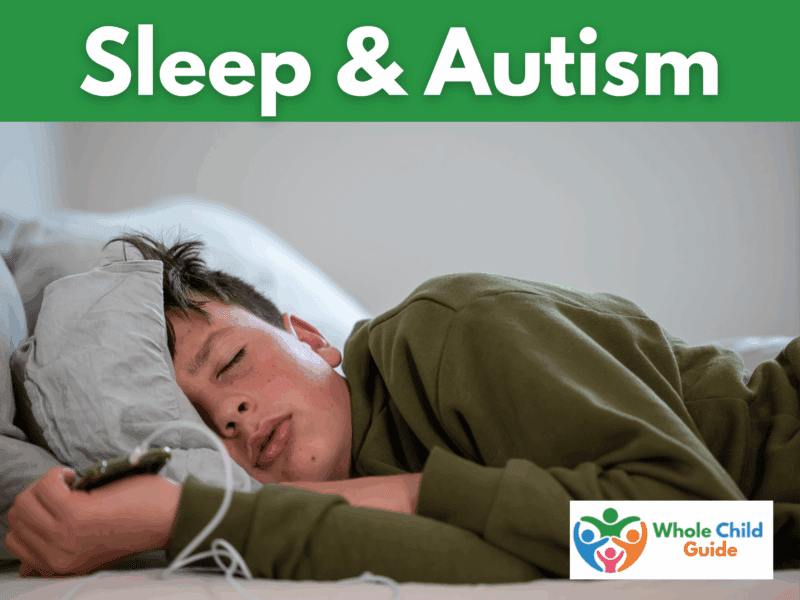
If bedtime feels like the hardest part of the day, you’re not alone. Many parents of children with autism spectrum disorder (ASD) struggle with bedtime resistance, frequent night wakings, or very early mornings.
Sleep challenges are extremely common in children with autism, and they affect the whole family. But the good news is that with the right strategies, a sensory-friendly sleep environment and a predictable, calming routine, restful nights are possible.
Let’s explore how a whole child approach, addressing sensory, behavioral, communication, and emotional needs, can help your child fall asleep and stay asleep more easily.
Why Sleep Problems Are Common in Autism
Research shows that sleep problems in children with autism are linked to several overlapping factors:
- Sensory sensitivities: Sounds, light, textures, or even the feel of sheets can overwhelm the nervous system.
- Difficulty with transitions: Moving from active play to rest requires emotional and physical regulation.
- Communication differences: Some children can’t express what feels uncomfortable, leading to frustration or anxiety.
- Biological rhythm differences: Some children with autism naturally produce less melatonin, a hormone that regulates sleep.
- Co-occurring conditions: Anxiety, ADHD, or gastrointestinal issues can also interfere with rest.
Understanding these connections helps you address sleep struggles from multiple angles, not just by enforcing bedtime, but by supporting the whole child. This is important because for kids that may struggle with communicating their needs, we may see children who are up and out of bed and in unsafe situations during the night. This is not, of course, applicable to every individual with autism. If this is a situation in your case be sure to read our resource on supporting children who are a flight risk during the night.
Step 1: Create a Sensory-Friendly Sleep Environment
Most of these suggestions in this article are applicable to everyone, not just a diagnoses. So be sure to apply the ideas to your unique situation.
The bedroom should feel safe and soothing, not stimulating. Every child’s sensory profile is unique, but these guidelines often help:
- Lighting: Use soft, dim lighting or nightlights in warm tones; avoid harsh overhead lights before bed.
- Noise: White noise or calming sound machines can block sudden noises and support regulation.
- Bedding: Choose smooth, breathable fabrics and avoid scratchy tags or textures.
- Temperature: Keep the room slightly cool (around 65–70°F).
- Weighted blankets: Deep pressure can provide calming input, but always confirm appropriate weight and safety with your occupational therapist.
Learn more about creating sensory-safe sleep environments in My Child Has Sensory Issues. What Can We Do to Help Them Fall Asleep and Stay Asleep?.
Step 2: Build a Visual and Predictable Bedtime Routine
Children with autism often feel calmer when they know what to expect. Visual bedtime routines are one option. You can use pictures, icons, or simple step-by-step charts. This can make bedtime predictable and reduce anxiety.
Autism Bedtime Routine Example (Every routine will be different)
- Bath or shower
- Pajamas
- Snack or water
- Brush teeth
- Story or calming activity
- Hugs or deep-pressure squeezes
- Lights out and white noise on
Try to keep bedtime within the same 30-minute window each night and use the same sequence of steps. Predictability builds trust and helps the body recognize when it’s time to rest.
For more on the power of routine, read Why Does My Toddler Keep Waking Up During the Night?.
Step 3: Support Sensory Regulation During the Day
Sleep starts long before bedtime. Kids who get balanced sensory input during the day are more ready to rest at night. Start with our free printable list of sensory strategies during the math.
- Include heavy work and movement activities like pushing, pulling, climbing, or jumping.
- Use outdoor time to get natural light exposure, which helps regulate the body’s internal clock.
- Offer quiet breaks and calming play when your child seems overstimulated.
An occupational therapist (OT) can help you design a personalized sensory plan that promotes daytime balance and nighttime calm. Read how OTs approach regulation and sleep in Should I Let My Baby Cry It Out? A Whole Child Approach to Baby Sleep.
Step 4: Address Communication and Emotional Needs
Sometimes bedtime resistance isn’t about sleep at all. It might be more about communication. If your child can’t express discomfort, worry, or needs clearly, bedtime becomes a source of frustration.
A speech therapist (ST) can help children build language and social communication skills that reduce anxiety around transitions and separation. Read more in How Can Speech Therapy Near Me Help?.
Step 5: Consider Gentle Behavioral Supports
Behavioral strategies can be effective when paired with sensory and emotional support.
- Use bedtime fading (gradually moving bedtime earlier).
- Offer positive reinforcement for staying in bed or using calming strategies.
- Keep check-ins brief and calm — reassurance without overstimulation.
- Avoid punishment or frustration-based responses; consistency and empathy work best.
A parent coach can help families balance compassion with structure, finding methods that fit your child’s personality and developmental needs.
Step 6: Discuss Melatonin and Medical Support
If your child still struggles despite environmental and behavioral changes, it may be worth discussing melatonin or other medical approaches with your pediatrician.
Melatonin can help regulate the sleep-wake cycle for children whose bodies produce less naturally, but dosage and timing should always be individualized and monitored by a healthcare provider.
Step 7: Collaborate Across Disciplines…The Whole Child Approach
For many children with autism, sleep improves most when multiple professionals work together.
- Occupational therapists address sensory and self-regulation needs.
- Speech therapists support communication and emotional understanding.
- Physical therapists improve comfort, posture, and body awareness. (Learn how PT helps kids thrive).
- Parent coaches guide families through consistent, gentle routines.
- Sleep specialists help track sleep patterns and rule out medical conditions like sleep apnea.
Visit the Whole Child Guide Directory to connect with professionals who specialize in autism and sleep from a collaborative, whole child perspective.
When to Seek Additional Help
Talk with your pediatrician if:
- Your child wakes frequently and can’t return to sleep.
- You notice loud snoring, breathing pauses, or gasping at night.
- Sleep issues lead to significant daytime fatigue, irritability, or meltdowns.
- You’re exhausted and need professional support for your family’s well-being.
Sleep difficulties are not your fault…and you don’t have to face them alone!
And, if you are a clinician or a professional who is a sleep specialist, you may want to focus on sleep and children with special needs or diagnoses like Autism. Check out our resource on how to find clients for your sleep training services. You can also list your services in our directory: