

It’s a question almost every parent of older kids asks at some point: “How much sleep do school-age children and teenagers really need?” Between after-school activities, homework, screens, and social life, sleep can quickly fall to the bottom of the list, but it’s one of the most important parts of your child’s overall development.
Sleep supports learning, emotional regulation, physical growth, and even social skills. Too little sleep doesn’t just cause morning grumpiness; it affects attention, memory, and resilience throughout the day.
Recommended Sleep by Age
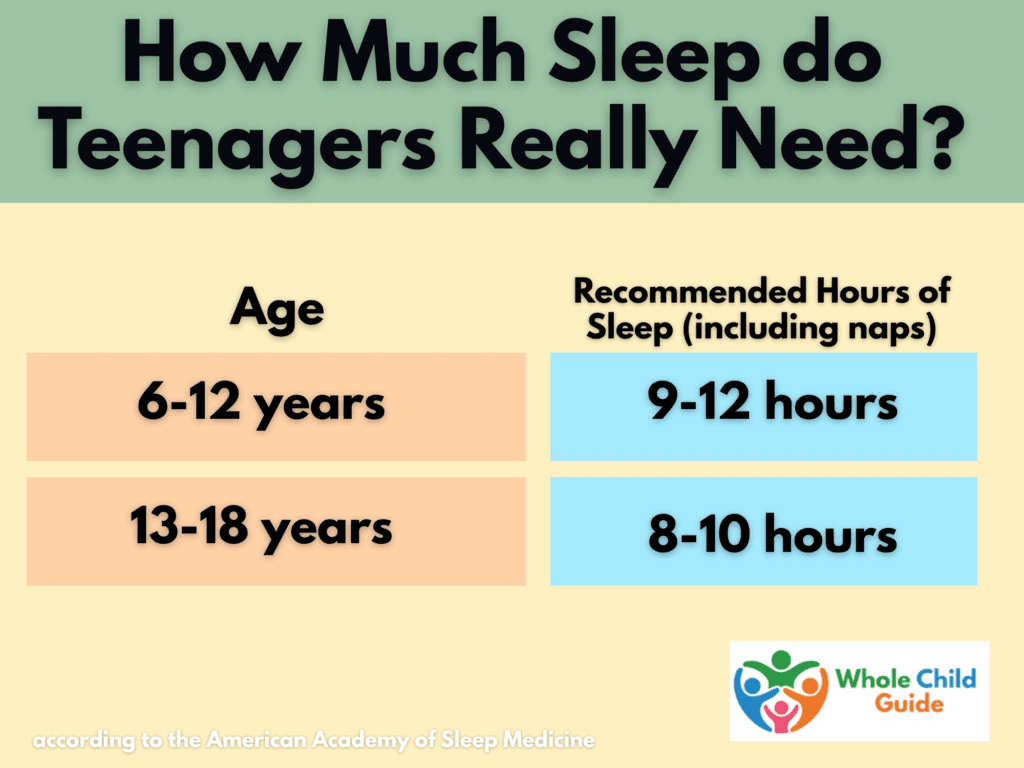
According to the American Academy of Sleep Medicine, the general sleep guidelines are:
| Age | Recommended Hours of Sleep in 24 Hours (Including Naps) |
|---|---|
| 6–12 years | 9–12 hours |
| 13–18 years | 8–10 hours |
Every child is unique, but if your child routinely gets less than this, it can start to show up as irritability, forgetfulness, or difficulty focusing in school.
The Impact of Too Little Sleep
When kids and teens don’t get enough sleep, their brains can’t process and store new information efficiently. That means homework takes longer, test performance drops, and emotional outbursts become more common.
You might notice:
- Mood swings or low frustration tolerance
- Trouble waking in the morning
- Poor concentration or “zoning out” in class
- Increased appetite or sugar cravings
- More frequent illnesses
Sleep deprivation can look like inattention or hyperactivity, symptoms that often mimic ADHD. This is one reason why addressing sleep should be part of any whole child approach to school success.
Can Teens Catch Up on Sleep Over the Weekend?
It’s tempting to think your teen can make up for lost sleep by sleeping in on Saturday and Sunday, but it doesn’t quite work that way. While a little extra rest can help them feel better short-term, it doesn’t fully restore the deep sleep that builds learning and memory during the week.
The bigger issue: weekend “catch-up” sleep shifts the body’s internal clock, making Sunday night harder and Monday mornings miserable. The goal should be a consistent sleep schedule within an hour of the same bedtime and wake time, even on weekends.
Why Sleep Is About More Than Bedtime
Sleep isn’t just a nighttime problem. It’s linked to daytime routines, sensory regulation, movement, and emotional health. A whole child perspective looks at all these pieces together.
- Occupational therapists can help children who struggle with sensory overload or have trouble winding down at night. (Learn more about how OTs approach gentle sleep.
- Physical therapists support kids who need more movement during the day to regulate their bodies for nighttime rest. (Read how PT supports child development).
- Speech therapists can help when communication or feeding issues disrupt family routines or bedtime connections. (Learn more about speech therapy’s role here).
- Parent coaches and sleep specialists can guide families in creating structure, consistency, and emotional safety around bedtime transitions.
Practical Sleep Tips for School-Age Kids and Teens
- Create a predictable evening routine. Dim lights, turn off screens 30–60 minutes before bed, and keep the same order of activities nightly.
- Encourage movement during the day. Physical activity improves both quality and depth of sleep. We have a resource on motor skills that can help.
- Watch caffeine intake. Soda, chocolate, and energy drinks can interfere with sleep long after dinner.
- Keep the room cool and dark. Sensory comfort matters. Temperature, light, and sound all affect rest.
- Model healthy habits. When parents prioritize sleep, kids learn that rest is part of self-care.
When to Seek Help
If your child or teen consistently struggles with falling asleep, staying asleep, or waking rested, it may be time to explore professional support. Sometimes underlying sensory, emotional, or medical factors are at play, and early intervention helps everyone in the family sleep better.
Start by visiting the Whole Child Guide Directory to find professionals who can help your family build healthy, gentle sleep routines from a whole child perspective.
Related Posts from Whole Child Guide
- What to do when your child has nightmares
- Co-sleeping- a whole child perspective
- Feeding and the Whole Child