

Parenting teenagers can feel like stepping into unfamiliar territory. One moment your child seeks independence, and the next they seem overwhelmed, emotional, or distant. Many parents find themselves wondering what changed, and how to stay connected while still guiding their teen through growing responsibilities and expectations. Through a whole child lens, the teenage years are not a phase to “get through,” but a critical stage of development where the brain, body, emotions, and identity are all evolving at once. When we understand what’s happening beneath the surface, we can respond in ways that strengthen connection, support regulation, and help teens build the skills they need to navigate this complex stage with confidence.
Understanding Behavior, Building Connection, and Supporting Growth
Parenting teenagers can feel like a completely new phase, one where the rules change, emotions run high, and connection can feel harder to maintain.
Many parents ask:
- “Why is my teenager so emotional or reactive?”
- “How do I stay connected when they push me away?”
- “Is this normal, or should I be concerned?”
- “How do I support independence without losing influence?”
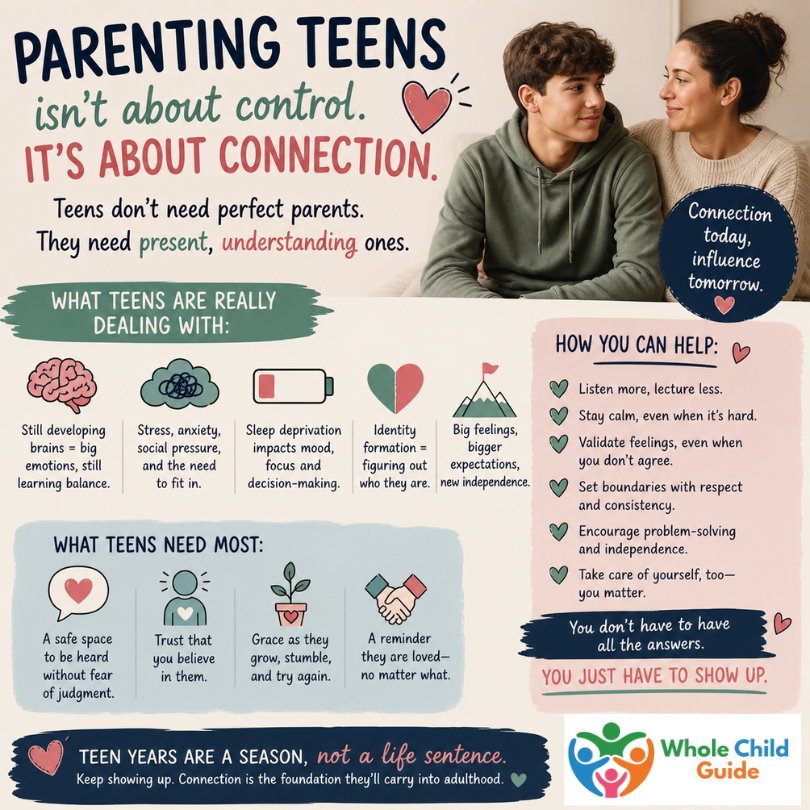
The teenage years are a time of rapid growth (physically, emotionally, socially, and neurologically). When we approach this stage through a whole child lens, we begin to see that teen behavior is not random or defiant, it is developmental, and we’ve all been there!
What’s Happening in the Teenage Brain?
The teenage brain is still under construction.
Two key systems are developing at different rates:
- The emotional center (limbic system) is highly active
- The thinking and planning center (prefrontal cortex) is still maturing
This means teens:
- Feel emotions intensely
- Seek novelty and independence
- Struggle with impulse control
- Have difficulty with long-term thinking
From a whole child perspective, this is not a problem to fix, it’s a stage to support.
Why Teen Behavior Can Feel So Challenging
Teen behavior is often misunderstood because it reflects internal changes we can’t see.
You might notice:
- Mood swings
- Withdrawal from family
- Increased need for privacy
- Risk-taking behavior
- Sensitivity to peer relationships
These behaviors are often tied to:
- Emotional regulation development
- Identity formation
- Social belonging
- Stress, sleep, and environmental demands
Sleep plays a major role in teen behavior. Learn more about how much sleep teens really need.
The Whole Child Lens: Looking Beneath Behavior
Just like younger children, teen behavior can be understood using an “iceberg” perspective.
What you see:
- Attitude
- Defiance
- Disengagement
- Irritability
What may be underneath:
- Anxiety or stress
- Social pressure
- Academic overwhelm
- Sleep deprivation
- Sensory or emotional overload
- Difficulty with executive functioning
When we shift from reacting to behavior to understanding what’s underneath, our responses become more effective.
Emotional Regulation in Teenagers
Teens are still learning how to regulate big emotions, just like younger children, but with more complex situations.
They may:
- Overreact to small situations
- Struggle to recover after conflict
- Feel misunderstood
- Experience intense highs and lows
Rather than expecting teens to “handle it,” a whole child approach focuses on:
- Co-regulation (staying calm and present)
- Validation (“That makes sense you feel that way”)
- Guided problem-solving
You can explore emotional development more deeply here: Social-Emotional Skills Through a Holistic View
The Role of Anxiety in Teen Behavior
Anxiety is part of mental health that often increases during adolescence due to:
- Academic pressure
- Social comparison
- Identity development
- Increased expectations
Teen anxiety may look like:
- Avoidance (school, activities, social events)
- Irritability rather than worry
- Perfectionism
- Physical complaints
Understanding anxiety helps parents respond with support instead of frustration.
Executive Functioning and Independence
Teens are expected to manage:
- Homework and deadlines
- Schedules and responsibilities
- Social commitments
- Long-term planning
But executive functioning skills are still developing.
This means teens may:
- Procrastinate
- Forget tasks
- Struggle with organization
- Need reminders
Instead of assuming laziness, a whole child lens recognizes these as developing skills.
Communication: Staying Connected While Letting Go
One of the hardest parts of parenting teens is maintaining connection.
Teens often:
- Talk less
- Seek independence
- Push boundaries
But connection still matters — deeply.
Helpful strategies:
- Listen more than you talk
- Avoid immediate problem-solving
- Stay available without forcing conversation
- Respect autonomy while maintaining boundaries
Connection creates influence, not control.
Sensory and Physical Needs Still Matter
Even though teens are older, their bodies still impact behavior.
Factors like:
- Sleep
- Movement
- Nutrition
- Sensory input
All influence mood, focus, and regulation.
Learn more about physical development and regulation: How Can Physical Therapy Near Me Help?
When to Seek Support for Parenting Your Teen
It may be time to seek support if your teen:
- Withdraws significantly from family or peers
- Shows ongoing anxiety or depression
- Has major changes in sleep or behavior
- Struggles academically despite effort
- Engages in risky or concerning behaviors
A whole child team may include:
- Counselors or therapists
- Occupational therapists
- Parent coaches
- Executive function coach
You can find professionals here: Whole Child Guide Directory
Parenting Teens: Balancing Support and Independence
The teenage years are not about control, they are about transition.
Your role shifts from:
- Manager → Guide
- Director → Supporter
- Problem-solver → Coach
This can feel uncomfortable, but it’s essential for growth.
A Whole Child Perspective on Parenting Teenagers
Teens are not trying to be difficult. They are trying to grow.
When we approach parenting through a holistic lens, we begin to see:
- Behavior as communication
- Struggles as skill gaps
- Emotions as part of development
- Connection as the foundation for change
Your teenager still needs you, just in a different way.
They need:
- Safety
- Understanding
- Boundaries
- Support
And most importantly, they need a relationship that allows them to grow into who they are becoming.