

If you’re searching for PT near me or physical therapist near me for your child, you’re probably wondering what pediatric physical therapy actually does and whether it’s the right next step. Pediatric physical therapy near me isn’t only for sports injuries or surgery recovery. It supports everyday development, confidence, and participation at home, school, and on the field. This post takes a whole child approach so you can see how PT fits alongside your pediatrician, OT, SLP, teachers, and coaches. You can also find information in our resource on finding an occupational therapist near me.
What Pediatric Physical Therapy Is (Whole Child Lens)
Pediatric PT helps kids build the foundations for movement: strength, balance, coordination, posture, endurance, and efficient movement patterns. Therapists look at the whole child, not just one body part.
- Body systems: muscles, joints, vestibular and proprioceptive systems, breathing and core stability.
- Function: rolling, sitting, crawling, walking, running, jumping, stairs, bike riding, playground skills, PE class, and sports.
- Participation: keeping up with classmates, confidence on the playground, joining teams, and playing without fatigue or pain.
- Teamwork: PT collaborates with your pediatrician, OT (fine motor, sensory regulation), SLP (feeding, breath support for speech), school staff, and if needed an orthotist for bracing.
Signs PT Could Help (Beyond The Obvious)
Parents often think of PT after an injury, but these everyday issues are common reasons to book an evaluation:
- Infants: flat spots, head turning preference, torticollis, limited tummy time, late rolling or crawling.
- Toddlers: frequent falls, toe walking, W-sitting, late walking, stiffness or extreme flexibility, dislikes climbing or stairs.
- School-age kids: poor balance on one foot, trips often, awkward running pattern, struggles with endurance in sports or PE, fatigues on long walks, avoids playground equipment, slumped posture at desk.
- Tweens and teens: knee, ankle, or back pain with activity, recurrent sprains, hypermobility, post-concussion rehab needs, limited sport performance due to strength or movement mechanics.
If you see several of these, searching pediatric physical therapy near me and scheduling an evaluation is a solid next step.
Diagnoses And Needs PT Frequently Supports
- Torticollis and plagiocephaly
- Prematurity and developmental delay
- Hypotonia or hypertonia
- Developmental Coordination Disorder
- Autism with motor planning or postural needs
- Toe walking
- Hypermobility and Ehlers-Danlos spectrum
- Orthopedic concerns: scoliosis monitoring, growing pains, Osgood-Schlatter, Sever’s disease
- Sports injuries and return-to-play programs
- Post-concussion care in coordination with medical providers
What A PT Evaluation And Sessions Look Like
Many times we do a quick Google search for something like what is the nearest physical therapy office near me, find an office, book an appointment, and that’s it. But what happens after that? No matter where you go for PT, you can expect an evaluation and then sessions geared around your evaluation results and goals.
Evaluation
- Discussion of your goals and daily routines
- Screening posture, flexibility, strength, balance, gait, and endurance
- Age-based movement testing and functional play
- Clear plan with home activities and measurable goals
Sessions
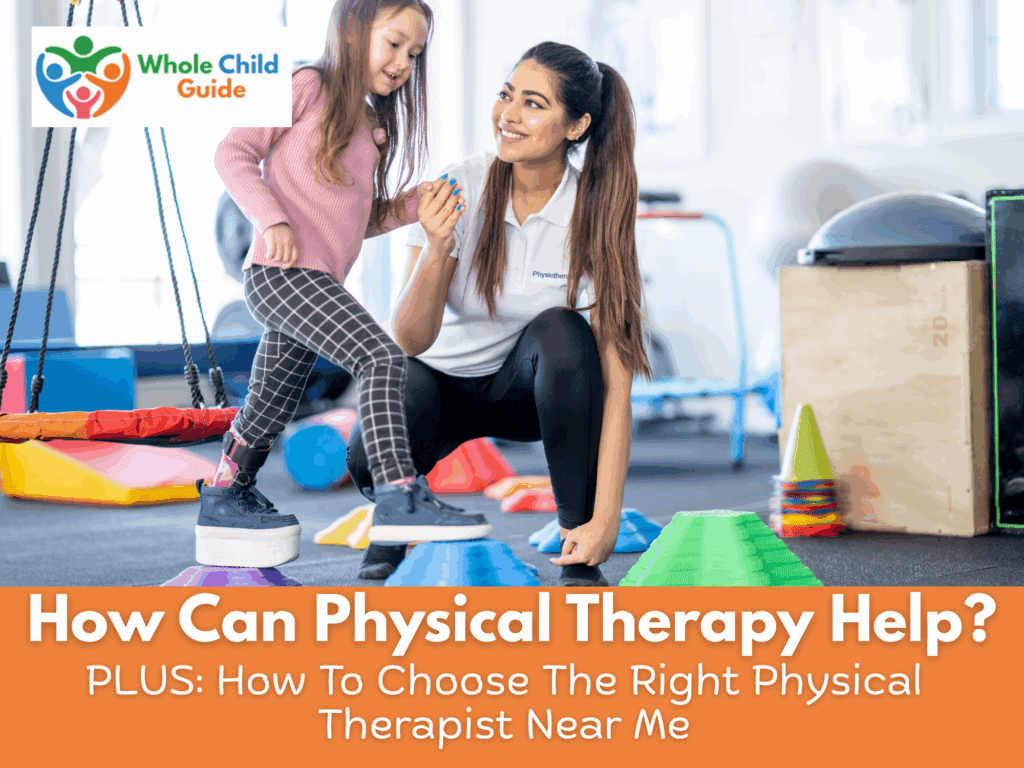
- Play-based skill building: obstacle courses, scooter boards, balance beams, lunges, hops, ladder drills, bike skills
- Motor learning strategies: break skills into steps, lots of reps, fun progressions
- Endurance training: kid-friendly circuits, interval walks or rides
- Education for caregivers and teachers so strategies show up in daily life
Whole Child Collaboration In Action
One thing that we want to highlight here at Whole Child Guide is the whole child lens in each practice. For physical therapy, that means collaborating with various practitioners to support the whole individual.
- Pediatrician: rules out medical causes, writes referrals, aligns on safe activity.
- OT: pairs postural control and sensory regulation with fine motor and self-care skills.
- SLP: coordinates breath support and feeding mechanics when relevant.
- School team: adapts PE, recess, and classroom seating for success.
- Coach or athletic trainer: refines warmups, mechanics, and return-to-sport plans.
- Orthotist: evaluates need for foot orthotics or bracing if indicated.
What You Can Try At Home While You Wait for your PT Appointment
The problem with many physical therapy appointments based on location is that you may have to wait before you can be seen. This is especially true when you are looking for specific experience in the physical therapist nearest your location. Before you can get to that PT near you, there are some things you can try at home…Of course, these suggestions depend on your needs, injuries, and goal areas.
Keep it simple and fun. These ideas do not replace therapy, but they build strong habits.
- Daily movement: playground time, nature walks, scooter or trike rides, simple obstacle courses.
- Balance: single-leg stands while brushing teeth, heel-to-toe walks along a line, pillow stands.
- Core and posture: animal walks, wheelbarrow walks, plank hold games, tall-kneel play.
- Endurance: kid-paced intervals like walk 1 minute, jog 20 seconds, repeat.
- Consistency: short bursts, most days of the week, and celebrate effort.
How To Choose The Right Physical Therapist Near Me
Use this checklist as you explore clinics in our directory:
- Pediatric experience with your child’s age and goals
- Play-based approach and clear home program guidance
- Ability to collaborate with your pediatrician, school, and other therapists
- Options for parent coaching, group classes, or sports-readiness programs
- Convenient scheduling and transparent insurance or self-pay options
FAQs for Finding the Right PT Near Me…
Do I need a referral to see a physical therapist near me?
In many areas, you can schedule directly. Insurance rules vary, so confirm with the clinic and your plan.
What’s the difference between PT and OT for kids?
OT focuses on fine motor, self-care, sensory regulation, and school tasks. PT focuses on gross motor abilities like balance, strength, posture, gait, and endurance. Many kids benefit from both.
How often will my child go?
Plans are individualized. A common pattern is 1–2 sessions per week plus a home program, then taper as skills stick.
Can PT help sports performance even without an injury?
Yes. PT can screen movement, build strength and mechanics, and improve endurance to reduce injury risk and boost performance.
Ready To Find (the Right) Help?
Search the Whole Child Guide directory to connect with pediatric physical therapy near me and local teams who look at the whole child. If you want tailored guidance on where to start, our coaching service will match you with a professional who can map out a plan and coordinate care.